
Views: 0 Author: Site Editor Publish Time: 2026-08-12 Origin: Site


A failing exhaust manifold isn't just a noise nuisance. It is a major breach in your engine’s primary ventilation system. This failure can quickly trigger a cascade of expensive mechanical breakdowns. You might face a hairline crack from intense thermal stress. Perhaps a warped flange blew out the gasket entirely. Delaying action shifts a standard repair into a critical safety hazard. It also guarantees severe engine damage if ignored.
This guide breaks down the exact mechanical consequences of driving with a leak. You will understand the severe safety risks involved. We also provide a clear decision framework for repairing versus replacing a compromised component. By recognizing the early warning signs, you can protect your vehicle from cascading failures. You will also learn how to budget realistically for the inevitable labor costs.
Safety First: Exhaust leaks at the manifold level can route lethal carbon monoxide directly into the vehicle's cabin through the HVAC system.
Cascading Damage: Ignoring a leak can result in burnt exhaust valves, melted under-hood wiring, and premature catalytic converter failure.
The Hidden Cost: The actual cost of replacing an automotive exhaust manifold often relies more on labor—specifically extracting seized or broken mounting studs—than the part itself.
Replacement Reality: Welding cracked cast-iron manifolds is rarely a permanent fix; full replacement with OEM or upgraded aftermarket parts is the industry standard.
Identifying a leak early saves engines. The symptoms often start small but escalate rapidly as the metal degrades. Look for these five definitive warning signs.
Cold-Start Ticking Noise: You turn the key, and you hear a distinct "tick-tick" sound. It echoes loudly from the engine bay. This noise is most prominent during a cold startup. As the engine runs, the metal heats up rapidly. It expands, which temporarily seals tiny cracks. The ticking often quiets down or vanishes completely after a few minutes. Many drivers ignore it. Do not let this temporary silence fool you. The structural crack remains.
Strong Exhaust Odors in the Cabin: A cracked manifold releases raw, un-catalyzed fumes directly under the hood. These gases escape long before reaching the catalytic converter. The climate control system then pulls these toxic fumes into the cabin. If you smell exhaust gas while running the heater or AC, you have a severe leak.
Check Engine Light (CEL) & Rough Idling: Your engine relies on upstream oxygen (O2) sensors to measure exhaust gases. A leak introduces fresh ambient air into the exhaust stream. The O2 sensors misread this excess oxygen. They tell the Engine Control Unit (ECU) your engine is running lean. The ECU compensates by dumping excess fuel into the cylinders. This overly rich mixture causes rough idling, stalling, and a sharp drop in fuel economy. It also triggers the Check Engine Light.
Visible Soot Accumulation: You can often spot a leak visually. Hot exhaust gases carry black carbon. When they escape through a crack or blown gasket, they leave physical evidence behind. Look for black soot tracking around the manifold heat shield. Check the mating surface against the cylinder head. Inspect the metal for obvious dark streaks.
Loss of Acceleration Power: Engines require precise backpressure and exhaust scavenging to operate efficiently. A leak destroys this delicate balance. The exhaust pulses lose their momentum. Scavenging efficiency drops significantly. You will press the gas pedal and notice a distinct lack of power. The vehicle will feel sluggish during highway merging or heavy acceleration.
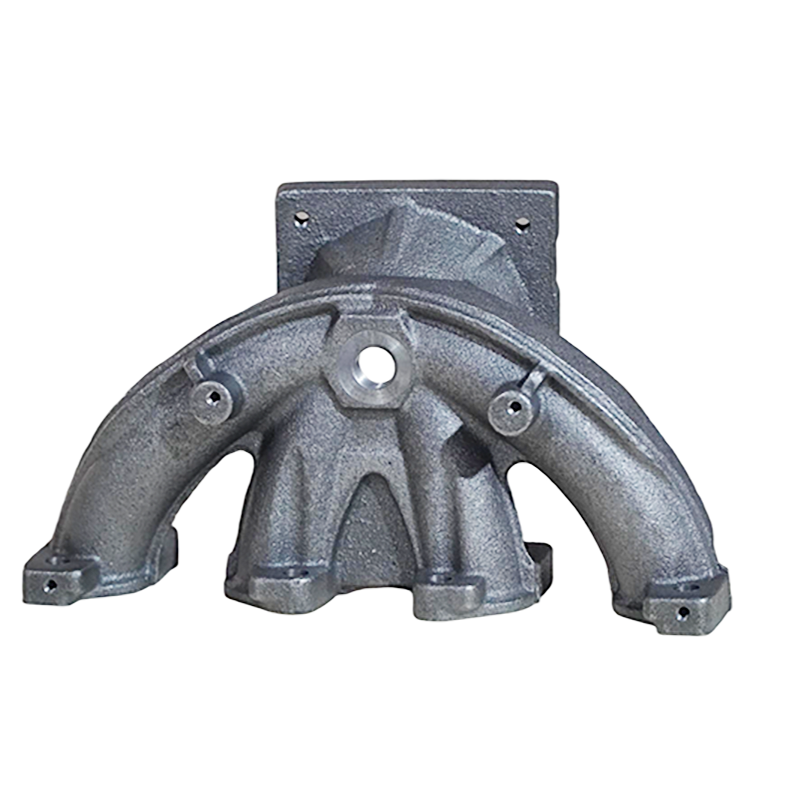
An untreated leak creates a hostile environment inside the engine bay. The resulting damage extends far beyond the broken component itself. Upgrading or replacing a compromised automotive exhaust manifold early prevents these catastrophic failures.
Thermal Cycling and Material Fatigue: Engines generate massive amounts of heat. The metal absorbs temperatures exceeding 1,200°F. When you park, the component cools rapidly. This extreme thermal cycle repeats daily. Over time, the cast-iron matrix loses elasticity. It becomes brittle. Micro-fractures form and eventually split open. The mounting flanges warp and pull away from the engine block.
The Broken Stud Dilemma: A warped flange does not just leak. It actively fights the engine block. The twisted metal exerts immense lateral shearing force on the steel mounting studs. Eventually, the pressure snaps the studs flush with the cylinder head. This creates a massive labor nightmare. Technicians must carefully drill out the broken steel without damaging the softer aluminum engine head.
Burnt Exhaust Valves: This is the most expensive consequence. When you decelerate, the engine creates a strong vacuum. A cracked pipe can suck cold ambient air back into the exhaust port. This freezing air hits the red-hot exhaust valves. The rapid cooling causes the metal edges to chip, crack, or burn. Fixing a burnt valve requires removing and completely rebuilding the engine cylinder head.
Collateral Heat Damage: Exhaust gases exit the cylinders at extreme velocities and blistering temperatures. A crack directs this blowtorch effect into the engine bay. The escaping gases quickly melt nearby plastic components. They destroy spark plug wires. They can even melt through vital electrical harnesses, causing random electronic failures and stalling.
We must treat manifold leaks differently than standard tailpipe leaks. The location makes it infinitely more dangerous. You cannot safely ignore this issue for long.
The Carbon Monoxide Threat: This forms a hard safety boundary. A tailpipe leak dissipates gas behind the vehicle. A manifold leak vents directly in front of the cabin firewall. The fresh air intake for your climate control sits right above this area. It pulls lethal, odorless carbon monoxide straight into the passenger compartment. It causes drowsiness, headaches, and impaired reaction times. This poses a fatal risk during long drives.
Fire Hazards: Engine bays are crowded. They contain highly flammable fluids like motor oil, transmission fluid, and power steering fluid. As vehicles age, minor fluid leaks develop. Escaping exhaust gases act like a concentrated heat gun. If these 1,200°F gases hit a leaking oil line or pooled fluid, they can ignite a sudden under-hood fire.
Driving Scenario | Risk Level | Actionable Recommendation |
|---|---|---|
Driving 2-3 miles to a repair shop | Low to Moderate | Roll down all windows. Turn off the HVAC system completely. Drive slowly. |
Daily commuting (under 20 mins) | High | Unacceptable. You risk progressive carbon monoxide exposure and burnt valves. |
Idling in traffic or long road trips | Critical | Do not attempt. High risk of cabin poisoning, wiring melting, and sudden breakdown. |
Once you identify the failure, you face a repair decision. The internet offers many cheap shortcuts. Most of them fail miserably under actual driving conditions.
The Myth of Exhaust Putty and Patches: Retailers sell high-temperature epoxy and JB Weld exhaust pastes. They market them as quick fixes for cracked iron. We transparently dismiss these products. They act as temporary, unreliable band-aids. These pastes cannot survive the intense 1,200°F heat. They also cannot flex with the extreme thermal expansion of the engine. The patch will crack and blow out within days.
Welding Cast Iron (The Stop-Gap): Some drivers try welding the cracks. Mechanics find welding cast iron incredibly difficult. It requires intense pre-heating in an oven. The welder must use specialized nickel rods. They also need a highly controlled cooling process to prevent immediate re-cracking. We frame this as a last-resort option. You should only weld if you own an obsolete or rare vehicle where replacement parts no longer exist.
Full Replacement (The Standard Procedure): Swapping the broken component is the most cost-effective long-term solution. A new part eliminates the warped flange issue completely. Mechanics pair the new component with a high-quality Multi-Layer Steel (MLS) gasket. This creates a permanent, flexible seal.
Factoring in Labor & Machine Work: We advise buyers to budget for unexpected labor costs. The part itself might be affordable. However, if a mounting stud breaks during removal, the repair quote changes drastically. Technicians must spend hours drilling and tapping the cylinder head. Always ask your mechanic for a "worst-case scenario" labor quote before authorizing the work.
You have choices when buying replacement parts. Selecting the right automotive exhaust manifold dictates how long the repair will last. You must balance durability, cost, and emissions compliance.
The material you choose impacts both performance and longevity. Consider the differences carefully.
Cast Iron Replacements: These mimic the original factory design. They offer OEM-level durability. Cast iron boasts excellent heat retention, which keeps exhaust gases hot and flowing fast. However, they are extremely heavy. They remain susceptible to the same thermal cracking over a long lifespan.
Tubular Steel / Stainless Headers: Aftermarket headers use lighter steel tubing. They offer significantly better exhaust flow and can increase horsepower. However, thin steel walls radiate more heat into the engine bay. They often require specialized high-temperature gaskets. They can also increase exhaust noise.
Many modern vehicles combine the primary catalytic converter into the manifold assembly. This single-piece design improves cold-start emissions. It also significantly increases the replacement cost. If your car uses this design, you cannot just buy a cheap iron pipe. You must purchase the entire integrated unit. Furthermore, you must verify the new converter meets local EPA or CARB compliance laws. Failing to do so guarantees a failed emissions inspection.
Never reuse old hardware. The original studs and nuts have endured thousands of heat cycles. They stretch, weaken, and rust. Emphasize the necessity of purchasing new, high-tensile hardware. Use specialized locking nuts that resist vibrating loose. Always install premium Multi-Layer Steel gaskets. Cheap composite gaskets will quickly blow out, forcing you to pay for the intense labor all over again.
An exhaust failure represents a severe structural breach, not just an auditory annoyance. It threatens engine vitality and passenger safety alike. Letting a leak persist guarantees collateral damage, from melted wiring harnesses to destroyed cylinder heads. We advise you to seek immediate diagnostic confirmation. Ask a trusted mechanic to perform a smoke test or a thorough visual inspection. Secure a realistic labor estimate early before the mounting studs shear off completely. Prompt replacement saves money, restores performance, and keeps toxic gases out of your cabin.
A: Minimally. You should only drive the vehicle directly to a repair shop. Extended driving risks severe health hazards from carbon monoxide poisoning. It also leads to expensive mechanical failures, including burnt exhaust valves and melted under-hood wiring.
A: Parts typically range from $100 to $800. Prices soar much higher if the assembly includes an integrated catalytic converter. Labor generally takes 2 to 6 hours. However, labor costs will increase dramatically if the technician encounters rusted or broken mounting studs that require drilling.
A: Yes. A leak throws off the upstream O2 sensor readings. This illuminates the Check Engine Light. It also allows untreated, toxic gases to escape into the atmosphere before ever reaching the catalytic converter.
A: Yes. It specifically causes burnt exhaust valves. The crack allows cold air ingestion during deceleration, which thermal-shocks the hot valves. It also forces the engine to run excessively rich, which washes oil down the cylinder walls and accelerates internal wear.


