
Views: 0 Author: Site Editor Publish Time: 2026-09-01 Origin: Site


The engine flywheel operates as far more than just a simple mechanical disc bolted to a crankshaft. It serves as the critical bridge connecting raw engine power generation to everyday vehicle drivability. Without it, your daily commute would be a harsh, shuddering, and violently unpredictable experience. You might be researching this component right now because you face persistent drivetrain issues. Perhaps your mechanic just quoted a surprisingly costly clutch replacement, leaving you wondering why parts are so expensive. Alternatively, you might be evaluating a performance upgrade for weekend track days and need to understand the mechanical limits of your current setup. These scenarios require a solid grasp of how rotational mass impacts overall drivability. Understanding its precise function is absolutely essential today. It empowers you to make cost-effective repair decisions. You can properly evaluate upgrade options without compromising long-term vehicle reliability. In this comprehensive guide, we will explore exactly how these heavy metal discs work, show you how to identify sudden failures, and help you decide whether to resurface or replace your current unit.
The engine flywheel serves three main roles: smoothing engine vibrations (rotational mass), engaging the starter motor, and providing a friction surface for the clutch.
Upgrading or downgrading between Dual-Mass (DMF) and Single-Mass (SMF) flywheels involves strict trade-offs between comfort (NVH) and durability.
When replacing a clutch, resurfacing a standard flywheel is often an option, but Dual-Mass flywheels generally require total replacement due to internal wear.
Flywheel failure symptoms often mimic transmission or clutch issues; accurate diagnosis requires inspecting ring gear teeth and measuring surface runout.
To fully grasp vehicle mechanics, you must first understand the fundamental jobs this component performs. It operates silently in the background, yet it dictates how smooth and responsive your vehicle feels. We can break down its operation into three vital mechanical realities.
Internal combustion engines do not produce power in a continuous, uninterrupted flow. They generate power through violent, intermittent explosions inside the cylinders. This creates harsh mechanical pulses during every combustion stroke. The heavy metal disk acts as a vital kinetic energy reservoir. It relies on its substantial rotational inertia to absorb these sudden, violent pulses. This stored kinetic energy keeps the crankshaft spinning seamlessly between individual firing events. It physically dampens the erratic energy spikes, eliminating the jerky, bucking feeling you would otherwise experience inside the cabin. We rely heavily on this rotating mass to smooth out the ride and protect delicate internal engine bearings from shock.
Look closely at the outer circumference of the component. You will spot a heavy-duty toothed ring securely mounted there. Engineers call this the ring gear. It connects directly to your vehicle's electrical starter motor. When you turn the ignition key or press the start button, the starter motor's small pinion gear kicks forward mechanically. It locks perfectly into the ring gear teeth to physically crank the heavy engine over. The mechanical leverage provided by this large outer ring makes starting possible. Broken, chipped, or missing teeth here cause immediate starting failures. You will hear a loud, harsh grinding noise instead of a starting car because the starter gear simply slips over the damaged metal section.
Finally, it acts as the primary power transmission friction surface for your manual transmission system. It provides a static, highly machined face composed of durable steel or iron. The clutch disk squeezes tightly against this flat surface. When you release the clutch pedal, massive clamping force from the pressure plate binds the clutch disk directly to this metal face. This mechanical lock transfers raw engine torque directly into the transmission input shaft. It effectively marries the engine's explosive power to the wheels. Any imperfections on this surface will ruin the transfer of power.
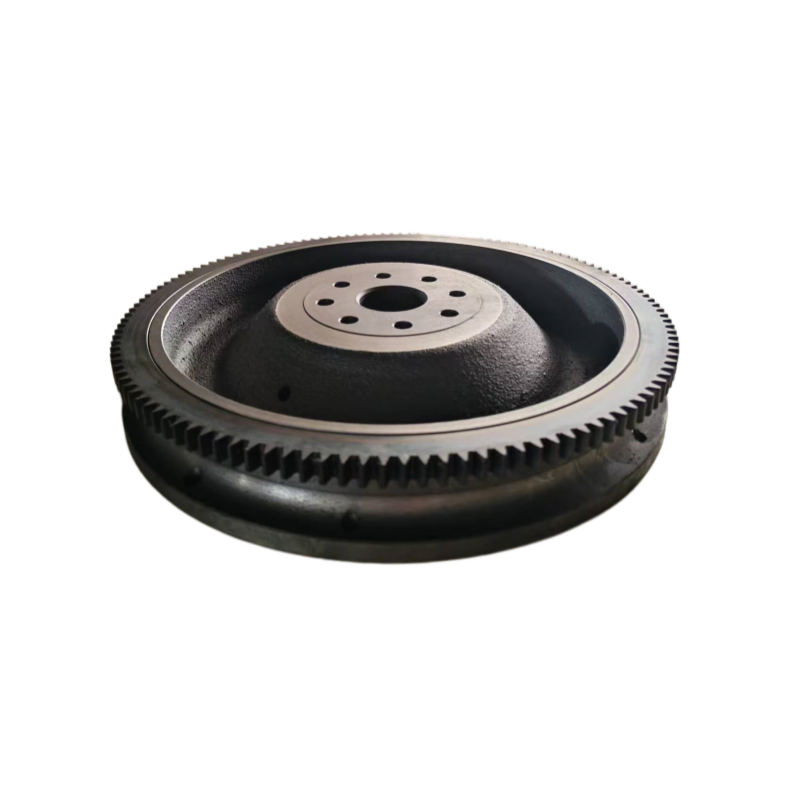
Automotive engineers categorize modern designs into two distinct solution categories. Choosing between them fundamentally dictates your vehicle's drivability, comfort level, and long-term maintenance costs. Understanding the differences is critical for making informed repair decisions.
Single-Mass designs represent the traditional, time-tested approach to drivetrain engineering. They consist of a single, solid piece of cast iron or forged steel. Their primary outcome is extreme, long-lasting durability under harsh conditions. They feature much lower upfront replacement costs compared to complex alternatives. Furthermore, professional machine shops can usually resurface them during a routine clutch job, saving you money. However, they carry specific drivability risks. A solid disk transmits significantly more engine vibration directly into the passenger cabin. This results in a slightly rougher idle and increased mechanical noise.
Dual-Mass designs solve the modern vibration problem. They feature two distinct, separate metal masses rather than one solid block. Heavy-duty internal dampening springs and friction shoes connect these two halves flexibly. Their primary outcome is superior vibration dampening. They deliver incredibly smooth shifting, quiet operation, and a refined luxury feel. Most importantly, they protect modern, high-torque manual transmissions from sudden mechanical shock loads. The risks center heavily around longevity and cost. The internal mechanical springs are prone to metal fatigue and failure over time. You cannot easily resurface a DMF due to this internal complexity. They demand a much higher replacement cost when they inevitably fail.
Many drivers face a common conversion dilemma as their vehicles age. When a DMF fails, owners often convert to a solid SMF to save money on parts. You must understand the specific trade-offs involved before authorizing this swap. Converting to a solid mass sharply increases Noise, Vibration, and Harshness (NVH). You will feel more gear rattle at idle, especially when the air conditioning is running. Furthermore, this modification can accelerate potential transmission wear. The gearbox suddenly must absorb the harsh shock loads the DMF springs previously eliminated. We advise weighing daily comfort against upfront repair costs very carefully.
Single-Mass vs. Dual-Mass Comparison
Feature | Single-Mass (SMF) | Dual-Mass (DMF) |
|---|---|---|
Construction | Solid piece of iron/steel | Two masses with internal springs |
Vibration Dampening | Low (transmits NVH to cabin) | High (smooth, refined feel) |
Durability | Excellent (rarely fails mechanically) | Moderate (springs wear out over time) |
Resurfacing Potential | Yes, often machinable | No, requires full replacement |
Replacement Cost | Lower | Significantly Higher |
Differentiating between a worn-out clutch and a failing rotating mass requires an evidence-oriented approach. Because both components operate together in the same physical space, their failure symptoms often overlap confusingly. We must look at specific physical and auditory cues to isolate the root cause.
Physical symptoms often manifest directly through the clutch pedal and the gear shifter. You might experience severe clutch chatter. This feels like violent shuddering or intense jerking during takeoff in first gear. It happens because the friction surface has become warped or uneven, preventing the clutch disk from engaging smoothly. Slipping gears under heavy acceleration also point directly to a surface problem. A damaged, glazed friction surface simply cannot hold the clutch disk securely under high torque. You may also notice strong, acrid burning odors after a steep hill climb. This distinct smell indicates extreme friction heat glazing the metal surface permanently.
Auditory cues provide excellent diagnostic evidence without needing to dismantle the car. Pay close attention to exactly when the strange noises occur. A harsh grinding or shrieking noise strictly during ignition usually indicates broken ring gear teeth. The starter gear is violently grinding against bare metal instead of engaging teeth. Conversely, listen for rattling sounds when the car idles in neutral. If a metallic rattling noise stops the moment you press the clutch pedal to the floor, you likely have a DMF spring failure. The internal dampening springs have collapsed entirely, allowing the two metal halves to rattle loosely against each other.
Professional technicians rely on precise diagnostic verification methods to confirm failure. They cannot fully guarantee the diagnosis without physically removing the transmission from the vehicle.
Visual Inspection: Once exposed, they inspect the metal face for severe heat-checking. These appear as dark blue spots or fine spiderweb cracks across the metal.
Runout Measurement: They measure surface runout using a highly sensitive dial indicator tool. This checks if the disk has warped out of shape. Any lateral wobble exceeding the manufacturer's tight tolerance dictates immediate action.
Free-Play Testing: For DMF units, technicians manually twist the secondary mass to measure rotational free-play. If it twists too far in either direction without spring resistance, the unit is dead.
Deciding between machining your old part or buying a new one acts as your primary maintenance bottleneck during a clutch job. We use a clear evaluation matrix to ensure you do not waste money or compromise safety.
You should only consider resurfacing standard Single-Mass units. The metal disk must only show minor surface glazing or superficial, even wear patterns. The absolute critical requirement involves minimum thickness tolerances. After a machinist cuts a fresh, perfectly flat layer of metal away, the disk must still meet original manufacturer thickness specs. If machining cuts it too thin, it cannot dissipate friction heat safely. It will warp quickly under normal driving conditions.
Certain conditions completely eliminate resurfacing as an option. You must fully replace the unit if you encounter any of the following scenarios:
All Dual-Mass Units: Their internal springs degrade heavily through normal heat cycles and mileage. Machining the outer face remains utterly useless if the internal springs remain weak and compromised.
Deep Heat Cracks: If you can catch your fingernail in a crack on the friction surface, the structural integrity is compromised. It could shatter under high RPMs.
Hard Spots: Extreme localized heat changes the metal's metallurgy, creating blue hard spots. Cutting tools bounce over these spots, making a perfectly flat resurface impossible.
Damaged Ring Gears: Missing or heavily chewed teeth mean the unit belongs in the scrap bin immediately.
You must always factor in heavy labor costs when making this decision. Accessing this component requires physically dropping the transmission out of the vehicle. This complex process takes a mechanic many labor hours to complete. Reusing a marginal, worn-out disk during a brand-new clutch installation is highly risky. If the old part ruins your new clutch six months later, you will pay for that exact same heavy labor twice. Replacing it proactively secures your initial investment. We consider replacing both components together a crucial industry best practice.
The performance enthusiast segment frequently evaluates aftermarket lightweight solutions to gain a competitive edge. While the theoretical benefits sound amazing on paper, we must maintain a skeptical, practical tone regarding exaggerated performance claims for street-driven cars.
Engineers design lightweight versions using aerospace-grade aluminum or chromoly steel. By significantly reducing the total rotational mass bolted to the crankshaft, they decrease parasitic drag. Reducing this rotational mass theoretically allows the engine internals to spin up much faster. The engine revs quicker when you press the throttle. This delivers immediate throttle response and pushes power to the wheels with less hesitation.
Physics dictates strict, unavoidable trade-offs. A lighter mass stores significantly less kinetic energy. Therefore, it requires much higher engine RPMs just to launch the vehicle from a standstill. You face a drastically increased risk of stalling the engine in everyday stop-and-go traffic. Furthermore, you experience a noticeable loss of cruising momentum. When you press the clutch to shift gears on the highway, the engine RPMs drop extremely rapidly. This forces you to shift faster and more aggressively to maintain a smooth drive. The lack of rotational inertia makes the car feel jerky and nervous at low speeds.
We recommend lightweight upgrades strictly for dedicated track cars. They excel in autocross applications, drifting setups, or heavily modified race engines. They offer distinct, measurable advantages when keeping engine revs high is your primary goal. However, we strongly advise against them for daily commuters. The constant stalling, harsh vibrations, and jerky low-speed drivability will quickly ruin your daily driving experience. Keep the heavy mass if you commute in traffic.
The engine flywheel remains a foundational component crucial to both raw power delivery and refined driving comfort. It acts as the unsung hero of your drivetrain, quietly absorbing violent engine pulses while allowing your starter and clutch to operate seamlessly. By understanding the mechanical differences between solid and dual-mass designs, you protect yourself from unexpected repair bills and ruined drivability. If you currently experience severe clutch slipping, shuddering on takeoff, or harsh starter grinding, you must take action immediately. We strongly advise consulting a certified drivetrain specialist for a physical inspection. Furthermore, always budget for a potential replacement unit whenever you schedule a routine clutch replacement. Doing the job right the first time guarantees your vehicle remains reliable for years to come.
A: It depends on your vehicle. For standard Single-Mass units, you can often save money by having a machine shop resurface it, provided it meets thickness tolerances. However, as a strict rule of thumb, you must completely replace Dual-Mass (DMF) units during a clutch job because their internal dampening springs wear out and cannot be repaired.
A: We highly advise against it. Driving with a badly damaged unit poses severe mechanical risks. A heavily cracked disk can physically shatter at high RPMs, destroying the transmission bell housing. Damaged ring gear teeth will eventually destroy your starter motor, leaving you stranded with a car that refuses to crank.
A: Costs vary drastically based on vehicle type. A basic Single-Mass replacement might cost $400 to $800, including parts and labor. However, replacing a modern Dual-Mass unit typically ranges from $1,000 to $2,500. The premium price reflects the complex mechanics of the DMF part and the heavy labor hours required to drop the transmission.


